What Happens After a Mass or High Profile Shooting?
The Public Outcry for Stricter Gun Control
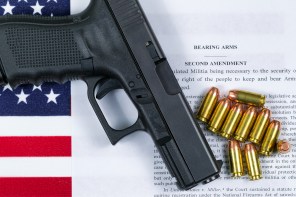
After every incident of either a high profile or mass shooting, the debate about gun control heats up again. Many feel more restrictions on gun ownership could prevent or at least curtail these incidents.
Now, to define my point of view: I am Texan, I do not myself own a gun of any sort. Being from Texas I grew up with guns, my father owned guns, I have fired a gun and know lots of people who own them. As for me now in adulthood, I do not now nor have I ever owned a gun. It scares me a little to own a gun just for the mere chance of an accident. Also, I have a quick temper and sometimes lash out in anger. I would not want to have a gun in my possession in one of those instances. So, while I do firmly believe in the right to own guns, I am not one who believes everyone should have one. With rights comes responsibilities.
According to one study two trends tend to emerge after a mass or high profile shooting: who can own guns and should there be a ban on large-capacity magazine weapons. The public outcry is “too many guns and too few gun controls” (Kleck). Obviously yes, these guns were used in a wrong way in the wrong hands, but would more gun control fix that?
Who Can Own Guns
In order to purchase a gun legally, such as through a licensed gun shop, sporting goods store or big box store, the purchaser must undergo a background check. There is a list of situations that can disqualify a purchaser such as being underage, a fugitive, unlawful user of controlled substances, illegal alien, subject to a restraining order, convicted of domestic violence and/or several other offenses. In addition, currently (2008 and prior) there are laws prohibiting the ownership of guns by those involuntarily committed to a psychiatric facility, adjudicated to be mentally incompetent and those with serious mental illness. (McGinty, M.S., Webster, Sc.d., M.P.H. and Barry, Ph.D., M.P.P.) So more legislation in this area seems ineffective.
How They Obtain Guns
Many of the guns used in these incidences are either stolen or acquired illegally. If they are not following the laws now, why would they follow enhanced laws?
Currently, laws require background checks and waiting periods. Gun shows have been a target of needing tighter restrictions, but they follow the same rules as gun shops with the exception of a “small number of non-commercial sellers.” Less than 2 percent of guns used by criminals are bought at gun shows. There is no credibility to the “gun show loophole” claim. (Lampo)
Waiting periods are a moot point once we discover that many of these perpetrators plan these massacres for months in advance. If they or a friend of theirs can pass a background check, they can wait the 3 days. Otherwise, they will find other ways to obtain the weapons, like stealing. No additional gun laws can or will prevent the theft of guns from legal gun owners.
What Type of Guns Can They Own
Now, as pro-gun rights as I am, this could be one area me and the gun rights population may differ. There are many types of guns. There are various guns for various uses such as pistols, shotguns, rifles. Some guns are used for hunting, some for target shooting, some for protection, some in the military and law enforcement. I do not see the point of allowing citizens to own assault weapons; those weapons with more power than needed for any of the above listed reasons. Now I understand the argument that if criminals own assault weapons (remember, criminals don’t follow the law) then citizens should be able to own them in order to protect themselves from them.
Are Current Laws Being Enforced
Even with the current laws being enforced,that does not prevent criminals from stealing guns and selling them illegally. Many perpetrators are breaking the laws to obtain their weapon of choice. After studying several mass shootings in schools, Gary Kleck concludes that “the specific gun control measures proposed in their aftermath were largely irrelevant and almost certainly could not have prevented the incidents or reduced their death tolls” (Kleck)
What Other Factors Come Into Play
Mental Illness
After a high profile or mass shooting the discussion often turns to the mentally ill. The focus on the mentally ill after these incidents has begun to put all mentally ill persons in a violent category. Those that commit these crimes may be mentally ill, but being mental ill does not automatically make you violent. This has had a negative effect on the treatment of the mentally ill and the illusion that more focus on the mentally ill will reduce the number of these violent crimes. In reality, the mentally ill have no more propensity to violence than the average person. (Murphy) Focusing on those specifically diagnosed with a mental illness can overlook the ones most likely to commit these massacres.
Desire for notoriety
One of the factors that is not talked about much but studied often is the desire for notoriety by those perpetrating the incidents. There was even discussion that it is possible each incident would escalate to more victims and more shock value in choosing the victims. One example of this is going from shooting peers in a high school (Columbine) to shooting elementary school children (Sandy Hook). These younger victims bring about even more outrage, more air time and more notoriety to the perpetrator.
Most of these mass shooting, mass killing and high profile incidents are not spontaneous acts. They are thought out for weeks or even months. They study previous incidents and even obsess over them. They are planned “meticulously, even ritualistically” (Schulman).
Social Media and News Coverage
Many times these perpetrators just want to be heard, to be acknowledged and social media perpetuates the magnitude of the events. They leave suicide notes, and even “manifestos,” created for public airing (Schulman).
What is a Real Solution…or Is There One?
If someone wants to kill a large number of people and is determined to do so, they will find a way. As far back as 1927, a man named Andrew Kehoe killed 45 and injured 58 at a school using explosives. Also remember the Boston marathon bombing, Oklahoma City, World Trade Center (1993) as well as several airplanes; Pan Am 103, Continental Flight 11 (1962) and United Airlines Flight 629 (1955) (Hawkins). In fact, the two suspects in the Columbine shootings actually “intended to kill most of their victims with two Propane-tank explosives and more than 30 homemade pipe-bombs packed with shrapnel” (Kleck). Guns are not the problem therefore additional gun legislation or banning guns is not the answer.
Unfortunately, trying to identify those most at risk to commit these type crimes is tough. Perpetrators come from various types of homes and family situations. Some from in-tact families and some from foster care. Some are doing academically well and some were failing. Some were loners, some were popular, some had behavior problems and some didn’t. (Bonanno and Levenson, Jr.)
These people don’t just find a gun and start shooting up schools or other public spaces. They plan and prepare. They find a way to get the guns or make the bombs they desire to use in their massacre. Typically they don’t go out and purchase one in a gun store with a background check. They steal or arrange to get one illegally. Will changing gun laws change this?
Sadly what we have is a humanity problem; a complicated, multi-faceted cultural and societal problem. Certain gun laws may be needed to close up any existing loop holes but overall it would not have prevented many (or any) of these incidents. As we have discussed criminals by nature do not follow the law and those determined to engage in a violent act will find a way.
References
Bonanno, Caitlin M. and Richard L. Levenson, Jr. “School Shooters: History, Current Theoretical and Empirical Findings, and Strategies for Prevention.” SAGE Open (2014): 1-11.
Hawkins, John. “The 10 Worst Bombings in US History.” 16 April 2013. http://www.townhall.com. 2 May 2016.
Kleck, Gary. “Mass Shootings in Schools; The Worst Possible Case for Gun Control.” American Behavioral Scientist (2009): 1447-1464.
Lampo, David. “Gun Control: Myths and Realities.” 13 May 2000. Cato Institute. 20 April 2016.
McGinty, M.S., Emma E., Daniel W. Webster, Sc.d., M.P.H. and Colleen L. Barry, Ph.D., M.P.P. “Effects of News Media Messages About Mass Shootings on Attitudes Towards Persns With Serious Mental Illness and Public Support for Gun Control Policies.” American Journal of Psychiatry (2013): 494-501.
Metzl, MD, PhD, Jonathan M. and Kenneth T. MacLeish, PhD. “Mental Illness, Mass Shootings, and the Politics of American Firearms.” American Journal of Public Health (2015): 240-249.
Murphy, Kate. “The Problem With Blaming Mass Shootings on Mental Illness.” 19 October 2015. The Federalist. 2 May 2016.
Schulman, Ari N. “What Mass Killers Want – And How to Stop Them.” The Wall Street Journal 8 November 2013.
 Kimbery Jimenez